Top 5 Best Pokémon Card Scanner Apps For Checking Card Value (2026 TESTED)
The best Pokémon card scanner app is the one that stays free after your first scans and is a non-stop price checker for when you're out trying to add chases to your collection. Most of them don't. You scan a few cards, the numbers pop up, and then somewhere around the bulk box you hit a paywall or a daily cap. Sometimes both.
Full disclosure before anything else: we build one of these. The Rare Candy app has a scanner, we think it's the best one out there, and it's number one on this list. You should still know how the rest of the field stacks up, so every app below gets a fair shake, including the parts where ours comes up short.
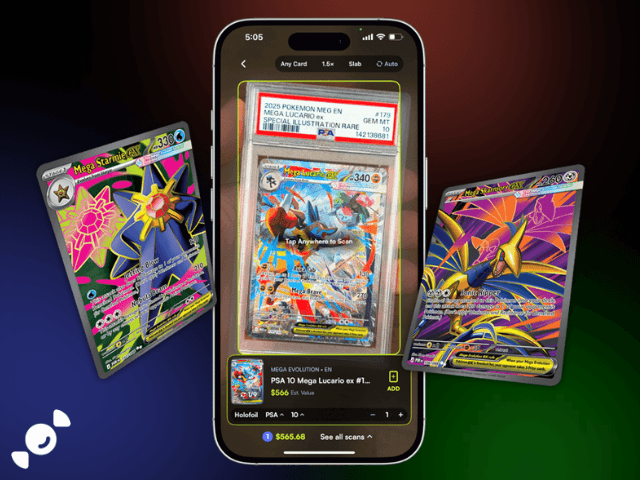
Below we have examples of all of the scanners in action. The gifs are all out of the box scanning features with the same lighting, the same cards, the same Card Slinger and the same network. None of the clips have been altered.
Scan and track your Pokémon cards for FREE and rip digital packs backed by REAL cards with the Rare Candy App!
The short version: the best Pokémon card scanner apps in 2026 are Rare Candy (best overall, and the only one that is free with unlimited scans, slabs and Japanese cards included), Collectr, TCGplayer, PriceCharting, and Dex.
How We Picked the Best Pokémon Card Scanner Apps
Every scanner on the App Store says it's fast and accurate. We looked at the things you can actually check before you download anything:
Is scanning actually free? Not "free to download." Free to scan a full collection, with no daily cap and no paywall halfway through.
What does it cost per year if you do end up paying?
Does it handle Japanese cards? A big chunk of the modern chase lives in Japanese sets, and plenty of scanners still stumble here.
Can it read graded slabs? Scanning a PSA 10 and getting the raw price back is not helpful.
Where do the prices come from? TCGplayer Market Price, eBay sold listings, or something else.
Can you buy or sell without leaving the app? Knowing what a card is worth is half the job.
Prices and plan details below are current as of September 2026 and come from each app's own pricing page or App Store listing.
Pokémon Card Scanner Apps Compared
On September 29, 2026 we tested all of the apps listed without cutting any footage. We used the same standard card slinger, the same 30th Celebration Pikachu cards, the same lighting, the same network, as well as the default scanner settings for each test. We have included the gifs below for visibility.
1. Rare Candy
The Rare Candy scanner is the only one on this list with no paid tier at all. Nobody pops up asking you to upgrade when you're three rows into a binder page. Every feature you see is the free version, because there isn't another version.
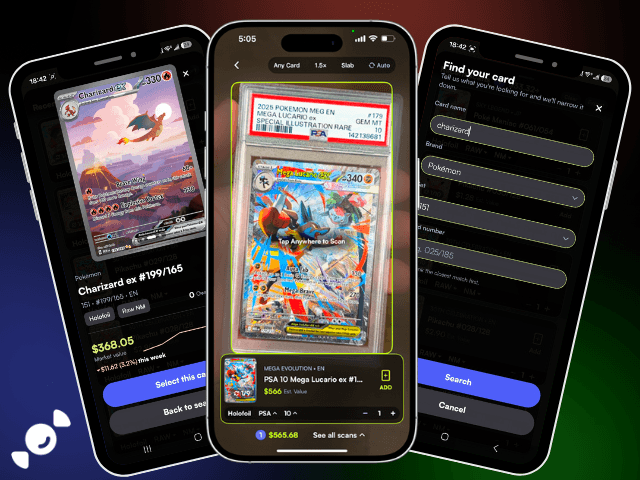
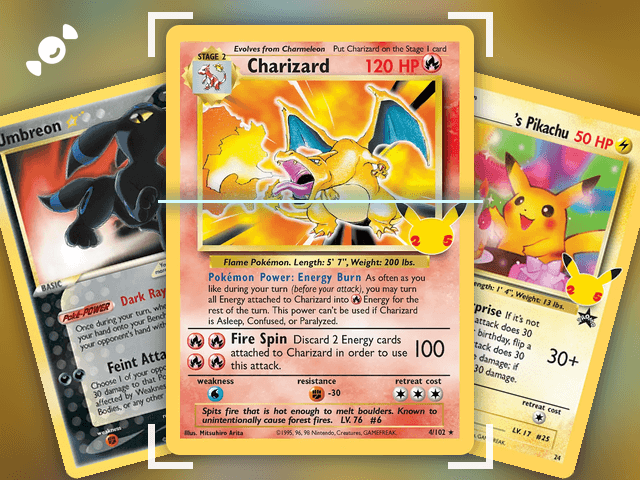
If you searched for a free Pokémon card scanner, this is the one that stays free. That would be a nice perk on its own, but the scanner itself is built for how people actually sort cards. Scanner 3.0 added an auto-scan mode, so for bulk sessions you just keep sliding cards under the camera and it keeps up without a tap in between. Point it at a card and it works as a Pokémon card value scanner in about a second, with the card, set, rarity, and current price right there. It reads raw cards and graded slabs from PSA, CGC, BGS, and TAG, and it handles Japanese Pokémon alongside English, which is where a lot of scanners quietly fall apart. The same scanner works for Magic: The Gathering, One Piece, Lorcana, Gundam, and Riftbound if your shelf has more than one game on it. It also includes sealed product through its Quick Product Lookup feature.
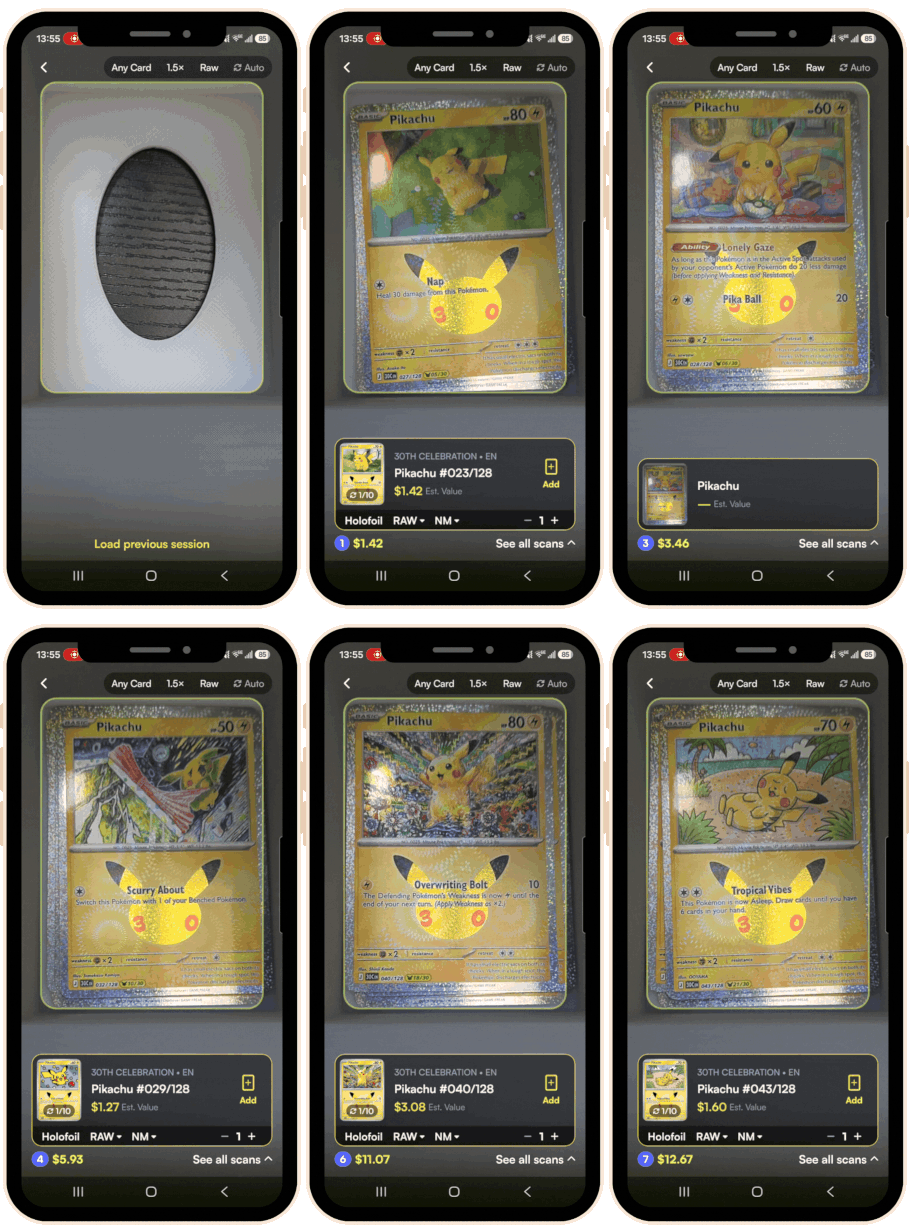
Where Rare Candy pulls away from everyone else is what happens after the scan. Cards drop into custom binders, master set tracking shows you exactly which cards you're missing from a set, and your collection value is tracked over time. Most of the other apps stop there. Rare Candy doesn't, since it's also a marketplace with verified sellers, singles, sealed product, and auctions. If a scan tells you you're one card away from finishing Evolving Skies, you can go buy that card in the same app. And if you'd rather rip for it, digital packs backed by real cards live in there too. Here is our guide to tracking your whole Pokémon card collection.
Over 200 million cards have been scanned on Rare Candy since launch, and as of this summer it was running about 15 million scans a month. That's a lot of bulk boxes.
Where Rare Candy falls short: Here's the honest part. It covers six games, where Collectr and TCGplayer cover 25 or more, so if your collection leans into Yu-Gi-Oh or Flesh and Blood, it won't cover everything. And a few App Store reviews mention the app getting sluggish during very long scan sessions, which we hear about and keep chipping away at with each update. Magic player? Here is our MTG card scanner guide. One Piece collector? Here is our One Piece card scanner guide.
Best for: anyone who wants to scan a whole collection for free, Japanese cards and slabs included, and actually do something with it afterward.
Got a binder you've been meaning to sort? Get the free Rare Candy scanner and run through it tonight.
2. Collectr
Collectr is the biggest name in the category. The portfolio view is the draw: your collection is charted like a stock ticker, with gains, losses, and daily movement, and it covers 25+ trading card games plus sealed product. The binder-page scan, which grabs up to nine cards at a time, is a genuine time-saver, though a few reviewers find it less accurate than scanning one card at a time.
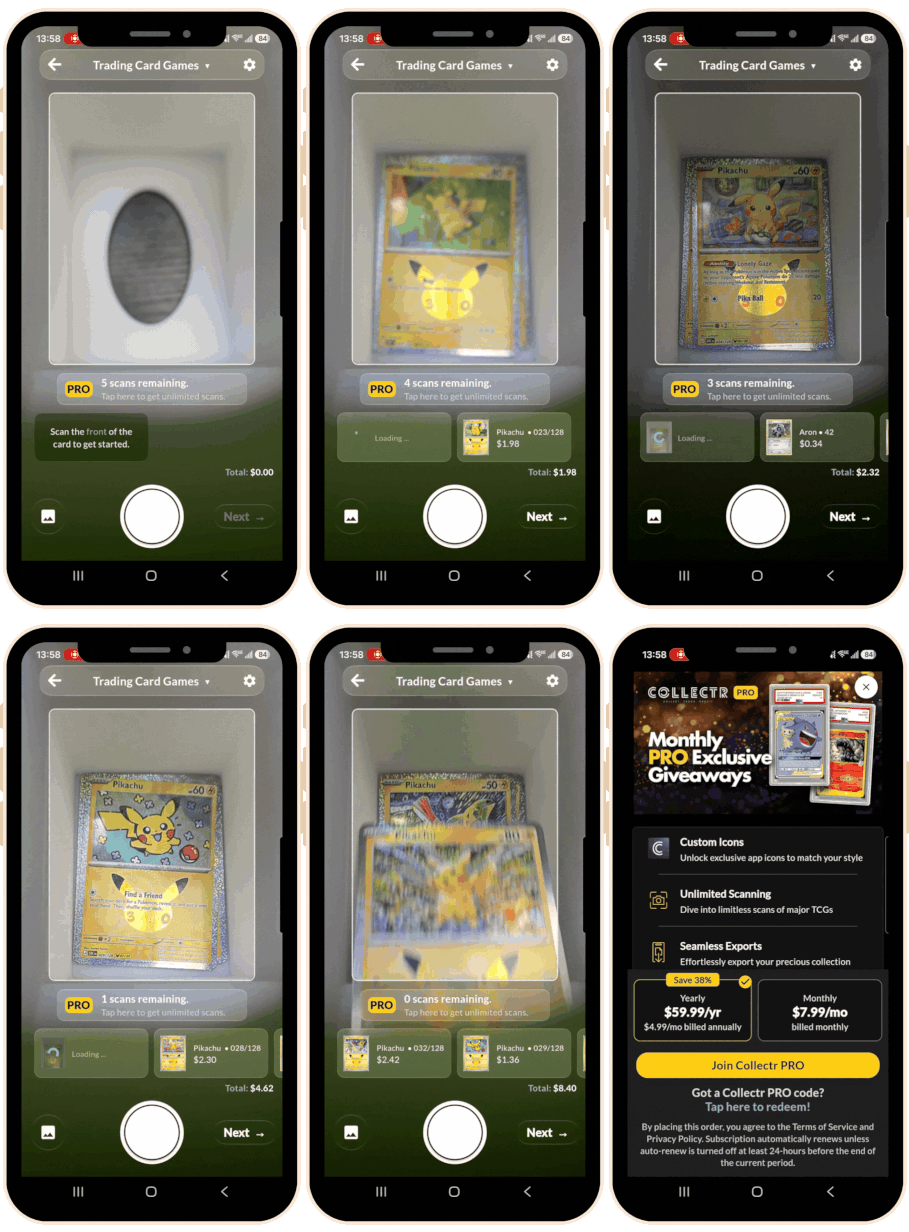
Where Collectr falls short: the power features live behind Collectr PRO, which runs $7.99 a month or $59.99 a year. That's where unlimited scans, 5+ years of price history, and collection export sit. Japanese variants and graded slab scanning are both inconsistent according to reviewers, and there's no native checkout, so buying a card means leaving for TCGplayer or eBay.
Best for: the collector who treats their binder like a portfolio. Budget for PRO if you're scanning in volume.
3. TCGplayer
TCGplayer is the price everyone else is quoting. TCGplayer Market Price is the reference number for most of the hobby, so it makes sense that plenty of collectors go straight to the source. The scanner is free, it covers 30+ games, and it plugs directly into the largest card marketplace in North America. Scan a card, see what it sells for, buy or list it, all in a few taps.
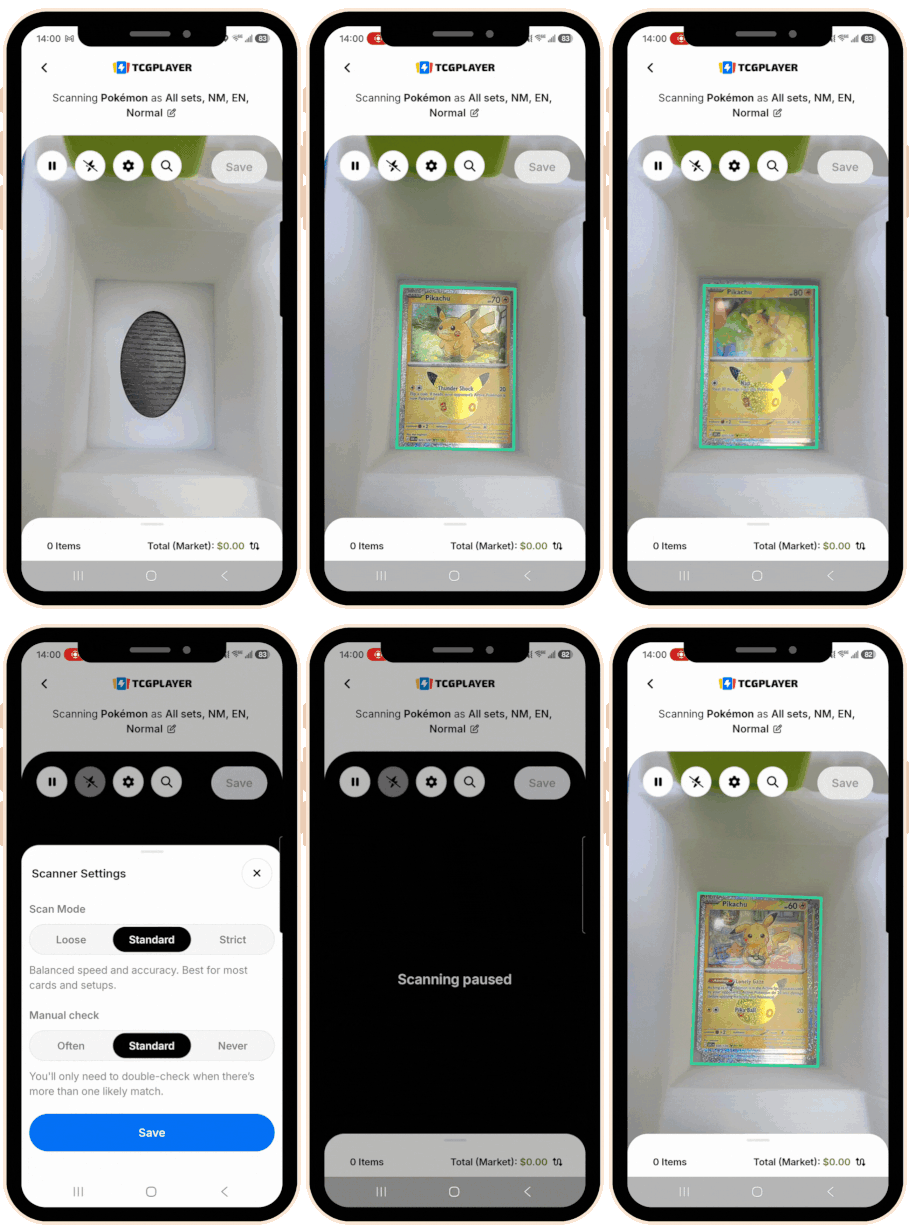
Where TCGplayer falls short: the scanner is a tool inside a store, and it feels that way. It doesn't read graded slabs, Japanese support is limited, and a recurring complaint in App Store reviews is the scanner grabbing the wrong variant (normal instead of reverse holo, for example), which is exactly the mistake that throws off a collection's value. Collection tracking is basic next to Rare Candy or Collectr.
Best for: English raw cards, when all you want is the TCGplayer price and a quick way to buy or sell.
4. PriceCharting
PriceCharting is the price history nerd's app (said with love). Its data comes from eBay and marketplace sold listings, updated daily, and it shows raw, PSA 10, and other graded prices side by side with years of history behind them. If you're trying to figure out whether a card is worth grading, or whether that sudden spike is real, PriceCharting's charts are some of the best around. It also covers Japanese Pokémon and has its own marketplace.
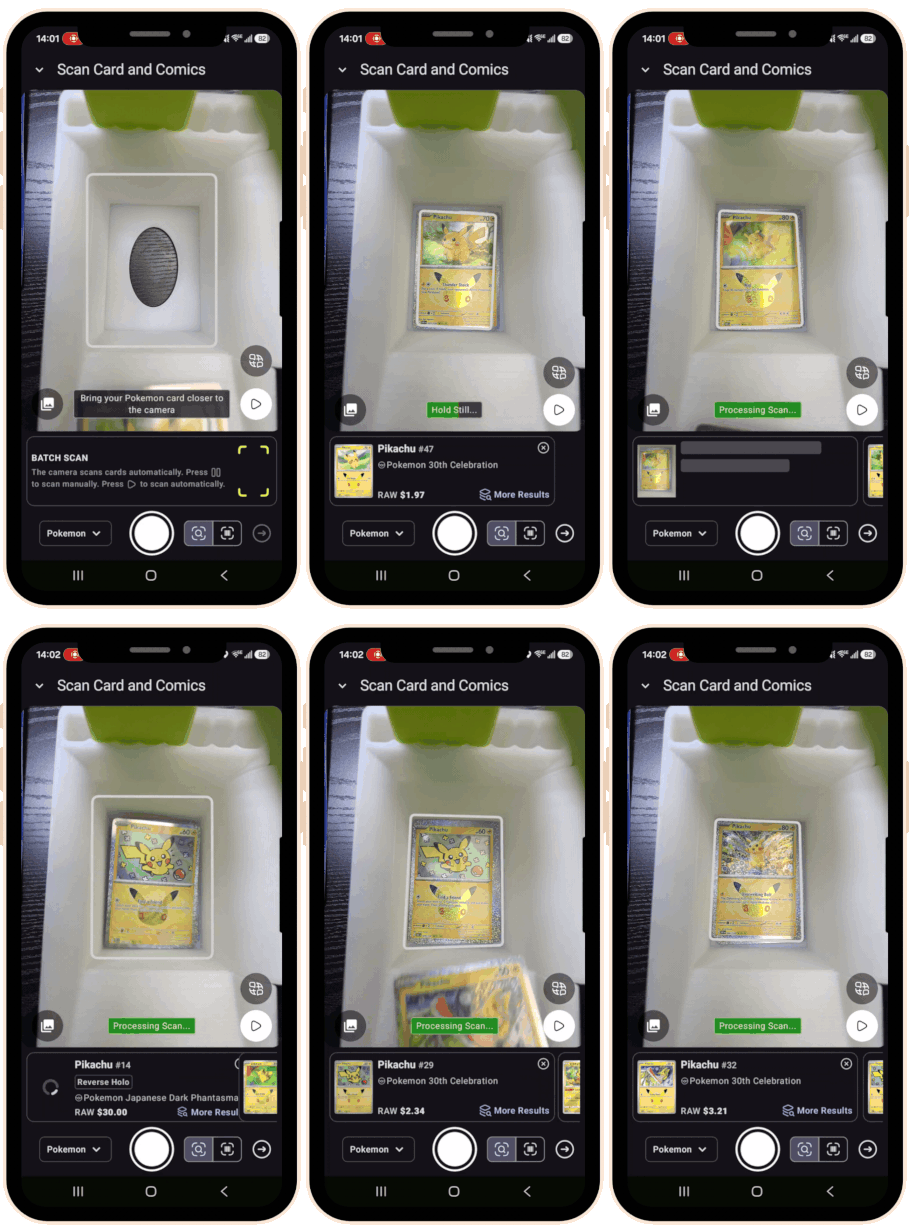
Where PriceCharting falls short: the scanner is free with ads, and unlimited use means paying for the Collector plan at $6 a month or $59 a year. Reviewers regularly mention scans that need manual fixing, and the free tier only gives you a single collection. It's a great price guide with a scanner attached, rather than the other way around.
Best for: collectors who care most about sold-price history and graded values.
5. Dex
Dex is the one built by Pokémon collectors, for Pokémon collectors only, and it shows. The binder mode lets you lay out 4, 9, 12, or 16 pocket pages, and variant tracking goes deep: 1st Edition, Shadowless, stamped promos, all split out properly. It covers English, Japanese, and Simplified Chinese cards, and you can choose which regional marketplace sets your prices. For a set completionist, it's a lovely app to spend time in. We were not able to use it due to the paywall
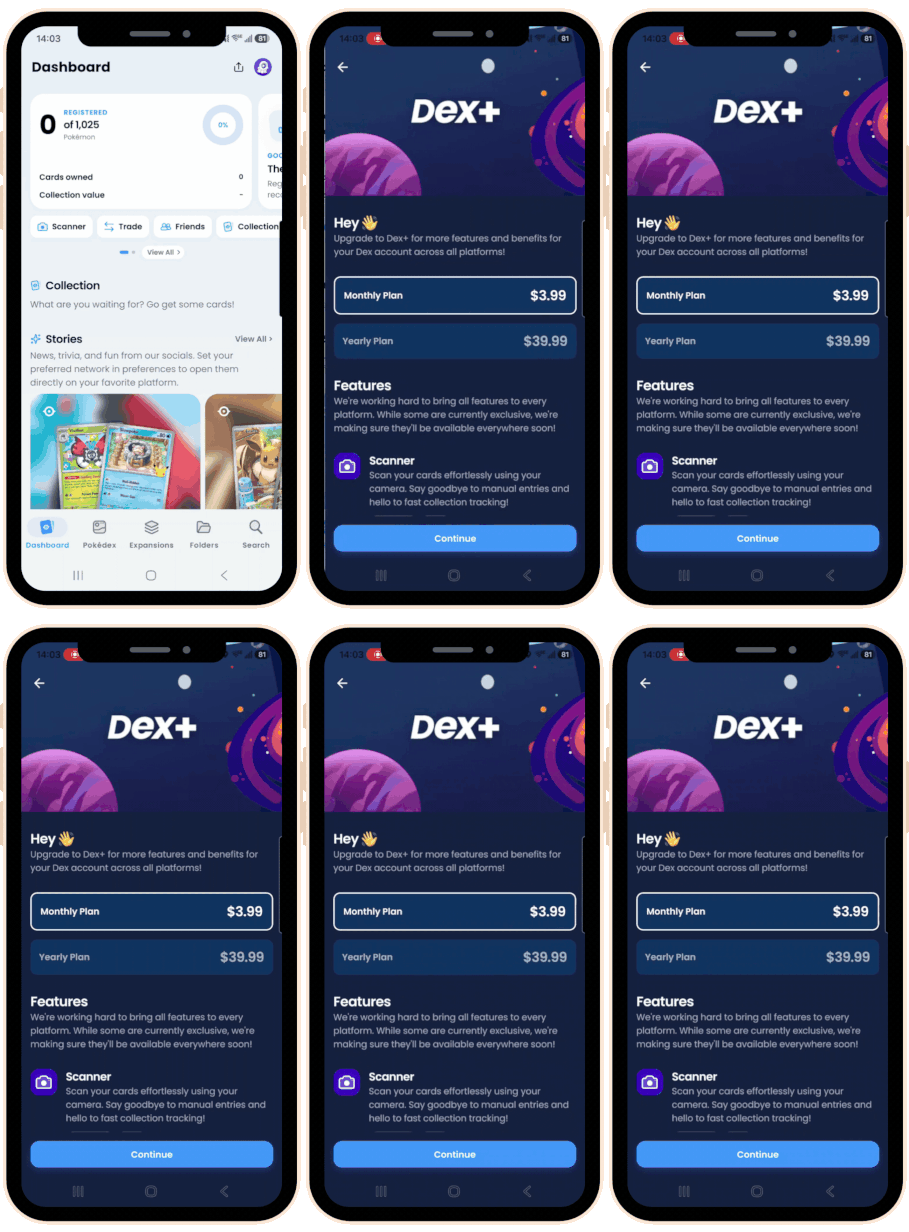
Where Dex falls short: the camera scanner is a Dex+ feature, at $3.99 a month. Free accounts add cards by searching. It also doesn't do graded slabs or have a marketplace, and it's Pokémon only.
Best for: Pokémon-only completionists who don't mind adding cards by search, or paying a few dollars a month to scan them.
Other Pokémon Card Scanners Worth Knowing
Ludex is a sports card scanner first, with Pokémon and Magic support on top. The free tier gives you unlimited scans but only 60 saved cards, with paid plans from $4.99 a month. Great if your collection is split between Pokémon and baseball.
Pokellector is the long-running set completion tracker that plenty of us started with, back when logging a collection meant typing in set numbers one at a time. It has a free scanner, but it's more of a checklist app than a pricing tool.
PokeScope gives you 5 free scans a day before a subscription kicks in, and doesn't support Japanese cards yet.
Which Pokémon Card Scanner Fits Which Collector
You want to scan everything for free. Rare Candy, and it isn't close. It's the only app here with unlimited scanning and no paid tier sitting behind it. Got a big pile? Auto-scan makes short work of it.
You collect Japanese cards or graded slabs. Rare Candy again. Both are supported in the free scanner, where most apps either charge extra or just get it wrong. Here is how slab scanning works.
You want to finish sets. Rare Candy for master set tracking with a marketplace to fill the gaps, or Dex if you're Pokémon only and don't need to scan.
You treat your collection like a portfolio. Collectr. The charts and community are the best in the category.
You want the TCGplayer price and nothing else. TCGplayer.
You're deciding what to grade. PriceCharting for the graded price history, then check the PSA grading guide before you send anything in.
FAQ
Is there a free app for scanning Pokémon cards?
Yes. Rare Candy is completely free with unlimited scans and no paid tier, and it reads both raw cards and graded slabs. TCGplayer's scanner is also free. Collectr, PriceCharting, and Dex all put some or all of their scanning behind a subscription.
Is the TCGplayer scanner accurate?
For English raw cards, it's generally reliable at identifying the card. The most common complaint is variant mix-ups, like logging a reverse holo as a normal holo, so double-check variants before saving. It doesn't scan graded slabs and has limited Japanese support.
Can you scan graded Pokémon cards?
Some apps can. Rare Candy scans PSA, CGC, BGS, and TAG slabs for free and pulls up the graded value. PriceCharting shows graded prices but doesn't scan the slab itself, and TCGplayer and Dex don't support slabs. For a walkthrough, see our graded card scanner guide.
Can I scan Japanese Pokémon cards?
Yes, with the right app. Rare Candy, PriceCharting, and Dex all support Japanese Pokémon cards. Collectr and TCGplayer are inconsistent with Japanese variants, and some newer scanners, like PokeScope, don't support them yet. Here is our Japanese Pokémon card scanner guide.
Can a scanner app tell if a Pokémon card is fake?
Not reliably. Scanner apps identify which card you're holding and pull its price, but they aren't built to authenticate it. For anything valuable, check the card in hand against a known real copy (our card condition guide covers what to look at up close), or send it to a grading company.
What is the best app to scan Pokémon cards and sell them?
Rare Candy and TCGplayer both let you scan a card and buy or sell it without leaving the app. Rare Candy adds free slab scanning, Japanese support, and set tracking, while TCGplayer has the widest game coverage.
The best Pokémon card scanner app is the one you never have to pay to keep using. After that, it comes down to what the app lets you do next, and on Rare Candy that means finding the gaps in your sets and filling them in the same place you scanned. Download the Rare Candy app and see how your collection adds up.